New latrines and handwashing bring pupils back to two Bunyangabu schools
Schools that once shared one pit latrine now have latrines, handwashing and a small income from soap and sanitary pads. Enrolment is up.
Person
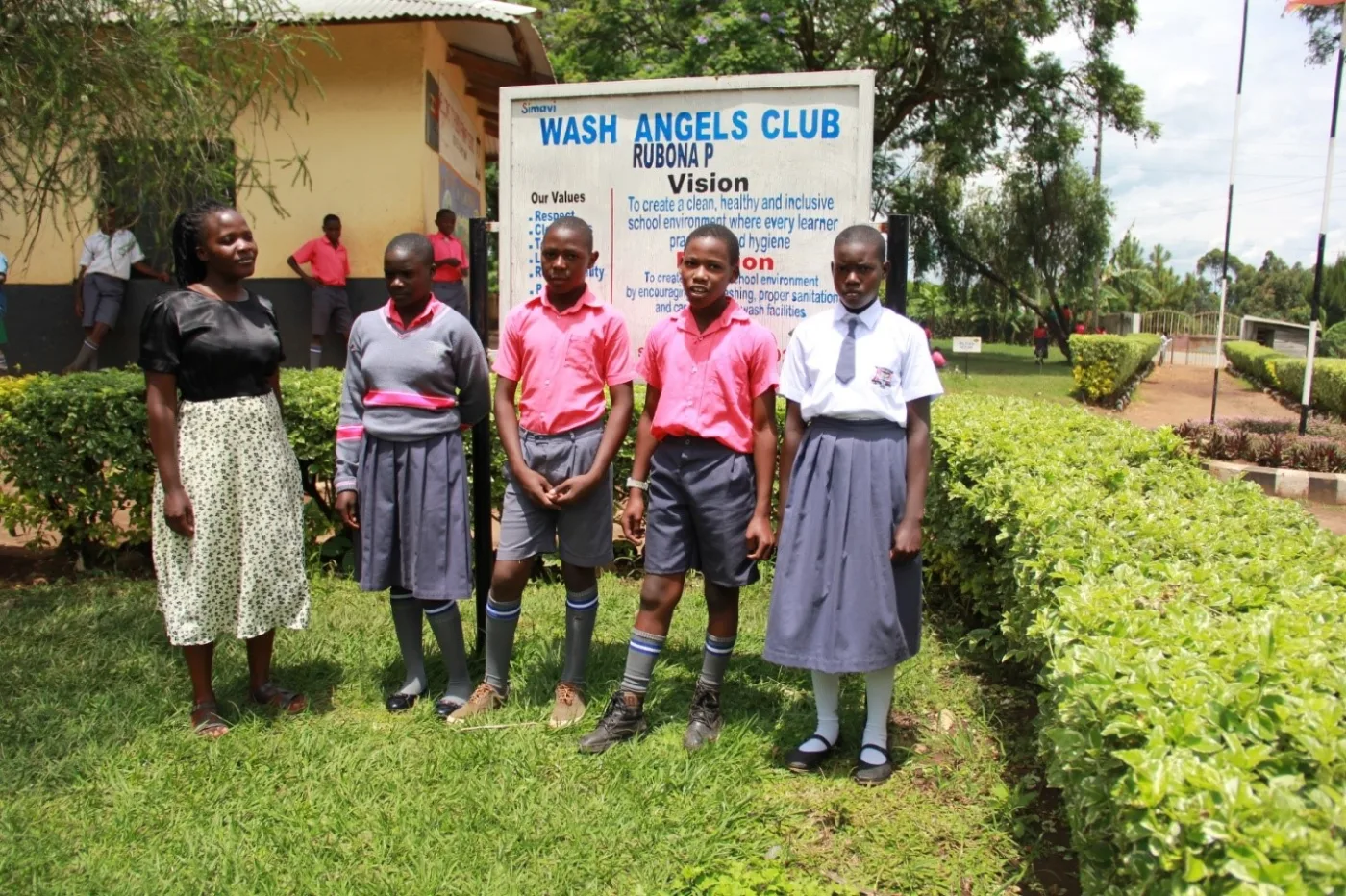
Jolly is deputy head teacher at Rubona Primary School. The pupils of two schools are at the centre of this story.
Place
Rubona Sub-County and Rwimi Town Council, Bunyangabu District, including Rubona Primary School and Kaburaisoke Hill Primary School.
Challenge
In several schools one pit latrine was shared by all pupils and staff. Parents withdrew children over safety and privacy. Kaburaisoke Hill Primary had no clean water on site, so pupils lost learning time walking to find it.
“When JESE came … to our school, all our problems were solved. A new pit latrine was constructed, mobile hand-washing facilities were procured, our pupils were trained to make reusable sanitary pads, and liquid soap.”
Response
In 2024 JESE, funded by Simavi, started the WASH, Learn and Share project to build WASH model schools in nine primary schools and improve WASH in 18 surrounding communities. Schools built latrines and got mobile handwashing stations. Pupils learned to make reusable sanitary pads and liquid soap. WASH Angels clubs now promote hygiene. Schools also run matooke plantations, vegetable growing, soap-making and pad-making, and the income funds the school and loans to teachers.
Change
Rubona Primary grew from 712 pupils in 2024 to 837. Kaburaisoke Hill Primary grew from 190 pupils in 2024 to 305 in 2026. Rwimi Town Council leaders built an extra two-stance latrine at Kaburaisoke Hill. At Rubona, teachers used loans to buy three goats and a cow; the goats have multiplied to eight. Schools plan to keep producing soap and pads to sell.
Keep reading
More from the field.
 Water, sanitation and hygiene
14 Aug 2025 Kaburaisoke North, Bunyangabu
A tap in her compound ends Kellen's six-kilometre walk for water
Read the story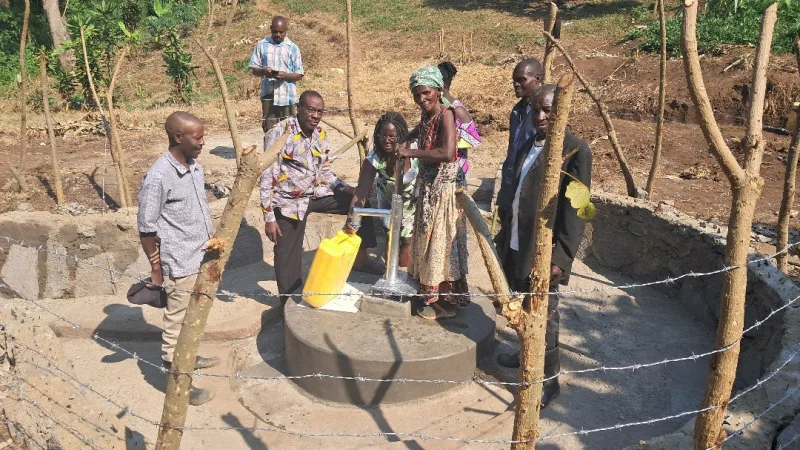 Community
30 Jul 2025 Buhuuna, Rubona, Bunyangabu
Buhuuna restored its well in weeks, with the community supplying stones, sand, cement and labour
Read the story Youth and skills
18 Nov 2025 Bunoga, Kyenjojo
Yonas learned tailoring, and now trains other young people in Bunoga
Read the story
Be part of the next chapter
Help the next story begin.
Partner with JESE to restore landscapes, strengthen livelihoods and support community-led change.